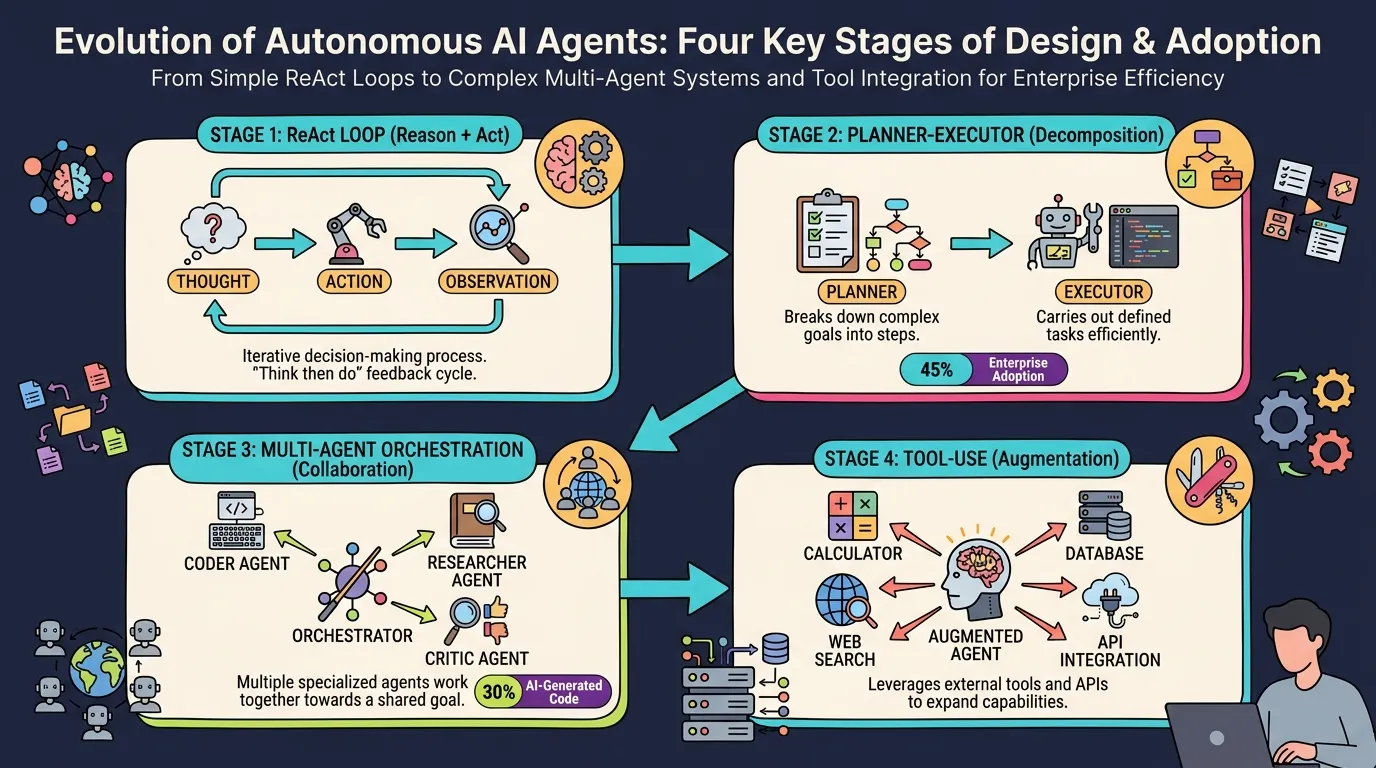
ServiceNow's AI Control Tower: Agentic AI Governance from Desktops to Data Centers
NVIDIA NIM and Microsoft Copilot integrations mark the opening of a serious battle for enterprise AI governance
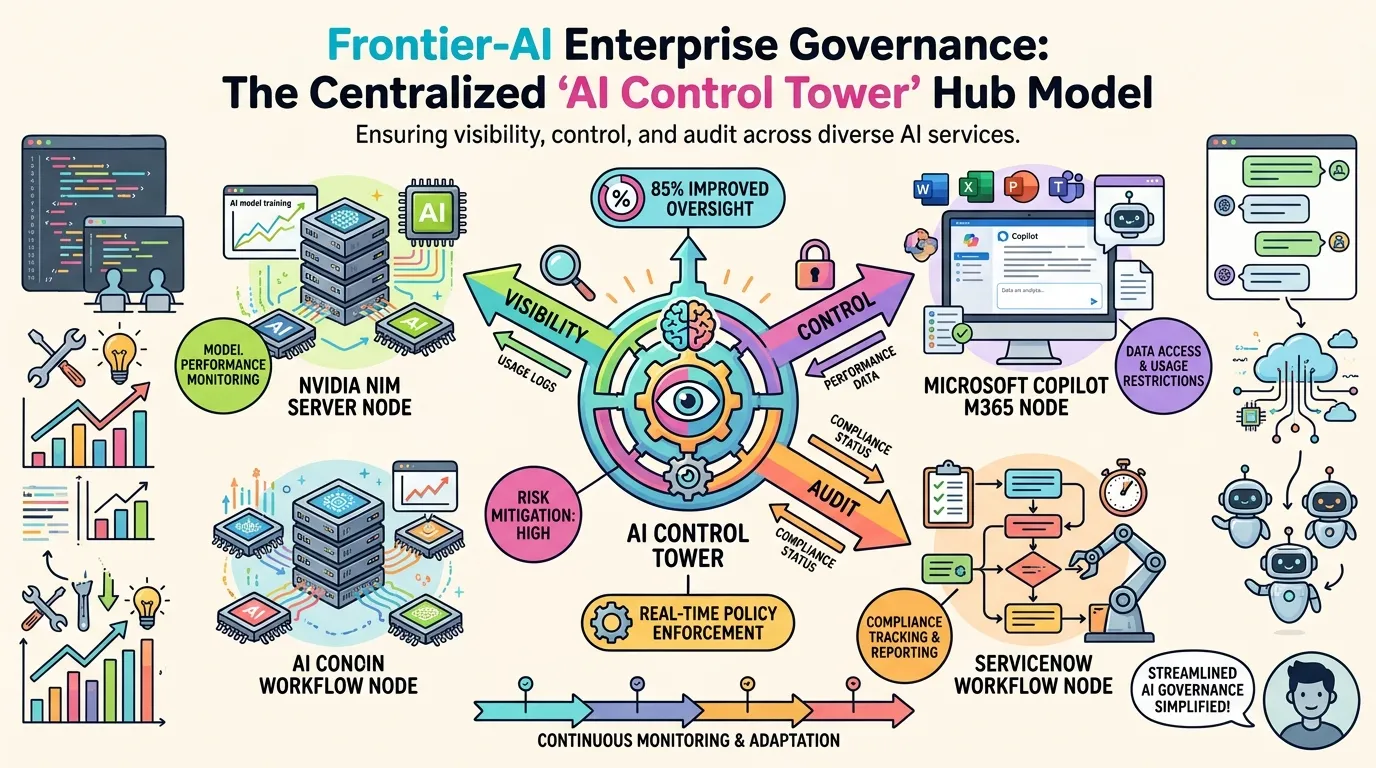
At Knowledge 2026, ServiceNow announced deepened integrations with NVIDIA and Microsoft. The NVIDIA partnership extends ServiceNow’s governance reach into data center–scale AI inference infrastructure running on Blackwell GPUs via NIM microservices. The Microsoft integration enables direct interoperability between M365 Copilot agents and ServiceNow workflows. The unifying concept tying both together is “AI Control Tower” — a single pane of glass for visualizing, controlling, and auditing multi-vendor Agentic AI deployments across an enterprise.
AI Control Tower: Governance for the Multi-Agent Era
The AI Governance challenge has fundamentally changed. Enterprises no longer run one vendor’s AI — they run fleets: ServiceNow agents handling ITSM, Copilot embedded in M365, custom agents built on foundation models, and increasingly autonomous Multi-Agent Orchestration pipelines across all of the above. Knowing what any given agent is doing, under what policy, with what authority — that’s become genuinely hard.
AI Control Tower targets this gap directly. It integrates three governance functions: visibility (what agents are running and what they’re doing), control (policy enforcement and permission scoping), and audit (tamper-evident logs for compliance). Think of it as the abstraction layer that makes multi-agent deployment manageable at organizational scale.
NVIDIA NIM Integration: Governance Goes Infra-Deep
The NVIDIA integration is the more architecturally significant of the two announcements. By connecting NVIDIA NIM — the Neural Inference Microservices layer running on Blackwell GPU clusters — into ServiceNow’s governance plane, enterprises can apply security policies and usage auditing at the inference infrastructure level, not just the application layer.
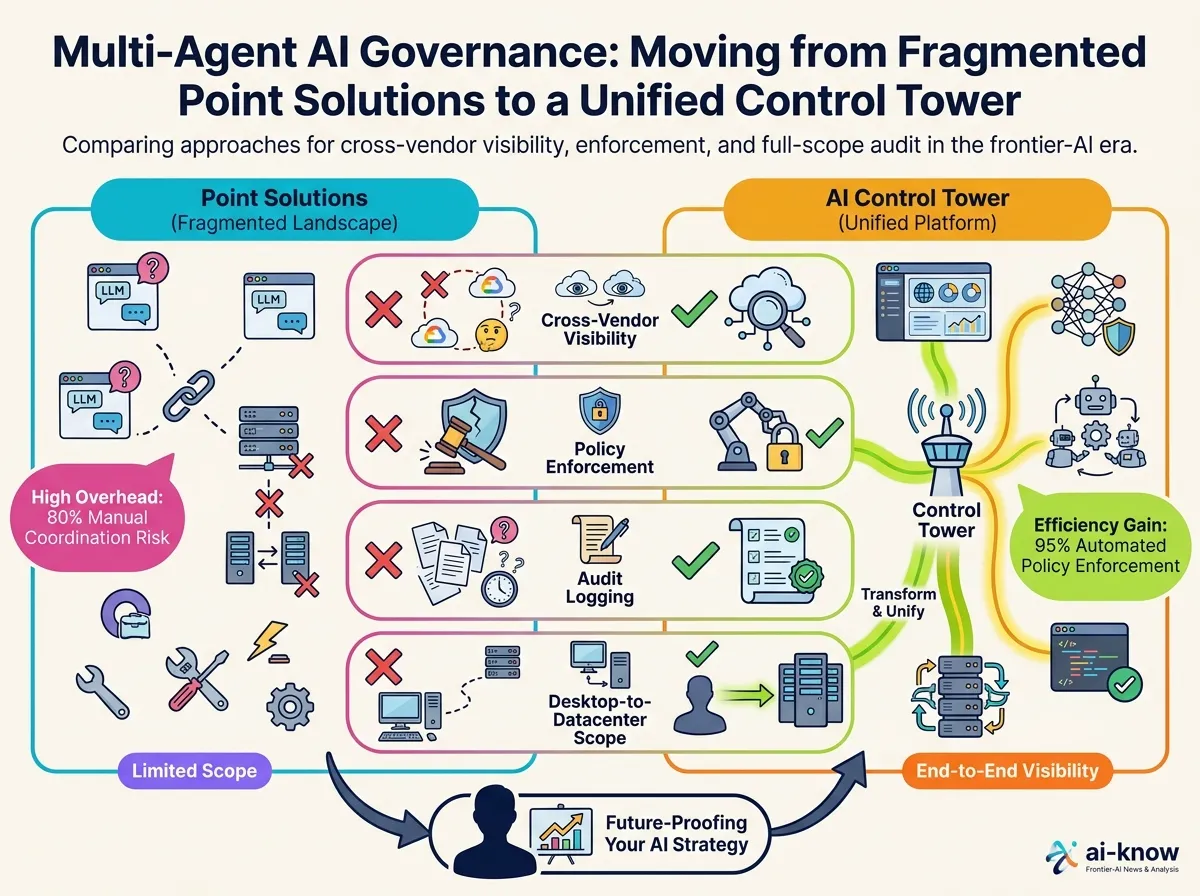
Previous approaches to AI Governance stopped at the software boundary. If an agent was misbehaving at the GPU inference layer, governance tools couldn’t see it. The NIM integration closes that gap and raises the floor for what enterprise AI governance means in practice.
Microsoft Copilot Integration: The M365 Bridge
The Microsoft integration enables ServiceNow workflow automation to both consume and trigger Copilot agents running in M365. A Copilot assistant detecting a potential IT incident in Teams can now auto-escalate through ServiceNow’s Multi-Agent Orchestration pipeline without manual handoff.
ServiceNow is redefining itself — from workflow automation platform to control tower for the enterprise’s entire agent fleet.
This positions ServiceNow at the intersection of IT service management and the broader AI ecosystem. Where Salesforce governs agents within its CRM orbit and AWS covers infrastructure-side controls, ServiceNow’s differentiator is cross-platform breadth — from GPU clusters to desktop applications, regardless of which AI vendor built the agent.
A Market Race Is Opening
The broader implication of this announcement is that the competition for enterprise AI mind share is shifting terrain. It’s no longer about which model performs best — it’s about who owns the governance layer when enterprises deploy dozens of agents from multiple vendors simultaneously.
The four-way race between ServiceNow, Salesforce, AWS, and Microsoft for the enterprise “AI control room” will define a major segment of IT spending in the second half of 2026. ServiceNow has moved first with the clearest cross-vendor positioning. Whether that early lead holds depends on how quickly the other three respond.
Related Articles
Anthropic Launches Claude for Small Business: 15 Agentic Workflows to Close the SMB AI Gap
Japan AI Policy 2026: Promotion Law, Data Consent Reform, and the NICT Safety Platform
Sierra's $950M Raise Signals the Enterprise AI Consolidation War
Anthropic Launches "Code w/ Claude 2026" — The Next Chapter of Agentic Coding Begins in SF
10 Charts That Explain AI in 2026: Progress, Adoption Gaps, and Backlash