Agents, Economist Hiring Sprees, and Missing Apps: Acemoglu's Three AI Fault Lines for 2026
Nobel laureate Daron Acemoglu argues AI's economic impact remains throttled by three structural gaps — and the data backs him up.
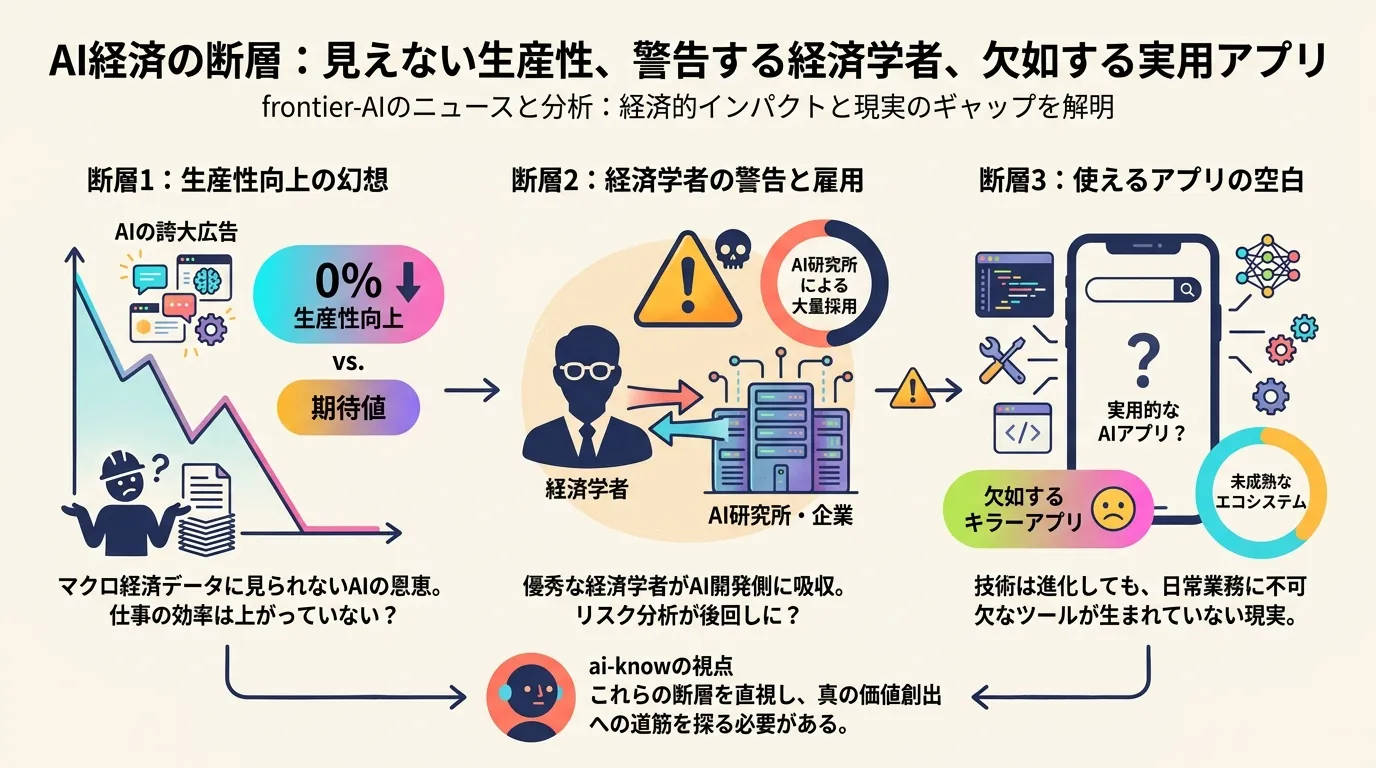
Daron Acemoglu, winner of the 2024 Nobel Memorial Prize in Economic Sciences and co-author of Power and Progress, has spent years arguing that the economic impact of AI is being systematically overstated. In a May 2026 piece for MIT Technology Review, he catalogued three specific structural gaps that explain why the promised productivity revolution has not materialised — and why AI boosters should be more cautious about their claims.
1. AI Agents and the Task-Bundling Problem
The current AI narrative positions Agentic AI as the technology that will finally automate entire jobs, not just narrow tasks. Acemoglu pushes back hard on this framing. A job, he argues, is not the sum of its tasks — it is a bundle of interdependent activities that require switching between formats, databases, tools, and counterparts in ways that demand contextual judgment at every step.
Current agentic systems can handle individual tasks impressively. They falter at the handoffs: correctly inferring when to escalate, adapting to institutional context that isn’t documented anywhere, and operating reliably across heterogeneous enterprise systems without human supervision. Until that integration ceiling is broken, agents will augment workers at the task level but will not displace them at the job level.
Empirical data supports the cautious view. IMF research published in early 2026 found no statistically significant acceleration in labour displacement in countries with the highest AI adoption rates. BIS economists flagged a similar gap between firm-level AI uptake and aggregate productivity metrics.
2. The Economist Hiring Spree
OpenAI, Anthropic, and Google DeepMind have all hired prominent academic economists over the past eighteen months. On the surface this looks like responsible stakeholder engagement — labs funding independent research on the social consequences of their own technology. Acemoglu sees a more troubling dynamic.
When a company employs the experts who are best positioned to evaluate its societal impact, the incentive structure shifts. Even well-intentioned researchers face institutional pressures that can subtly tilt their public statements toward the narratives their employers prefer. The result is an erosion of the independent analytical capacity that policymakers and the public need to make informed judgements about AI Economics and AI Workforce Displacement.
This concern is not hypothetical. Several published studies co-authored by lab-affiliated economists have been criticised for methodological choices that, conveniently, tend to minimise estimates of job displacement or overstate productivity gains. Independent replication has been mixed.
3. The Missing Usable App
The third gap is perhaps the most concrete. Acemoglu asks a simple question: where is the AI equivalent of PowerPoint or Excel — the application that a typical worker can pick up in an afternoon and immediately use to get more done?
ChatGPT and Claude are impressive, but they require users to craft prompts, evaluate outputs critically, and iterate. That is a meaningful skill gap for most of the workforce. The AI Commercialization boom has produced many sophisticated tools for developers and analysts, but purpose-built applications for administrative staff, healthcare workers, educators, and tradespeople remain either non-existent or too rough-edged to deliver reliable value without significant onboarding.
Until this application layer matures, AI productivity gains will remain concentrated among a small segment of technically sophisticated users. Enterprise pilots will produce glossy case studies; aggregate statistics will remain flat.
Why This Matters in 2026
Acemoglu’s critique lands at a moment when the gap between AI hype and AI reality is becoming politically charged. Cloudflare’s announcement in May 2026 that it had made 1,100 roles redundant partly through AI automation generated headlines — but it is a single data point, not a trend. Stanford HAI’s 2026 AI Index found that while AI capabilities continue to expand rapidly, measurable labour market impacts remain localised and sector-specific.
The three structural gaps Acemoglu identifies — agent task-bundling limits, economist hiring bias, and absent usable apps — provide a coherent framework for understanding why this is so. They also suggest where to watch for change: if agent orchestration improves dramatically, if independent AI economics research is funded by non-lab sources, or if a genuinely accessible AI productivity application breaks through, the picture will shift. Until then, the productivity gap is real, and betting heavily against it carries risk.
Sources: Three things in AI to watch, according to a Nobel-winning economist | MIT Technology Review (2026)
Related Articles
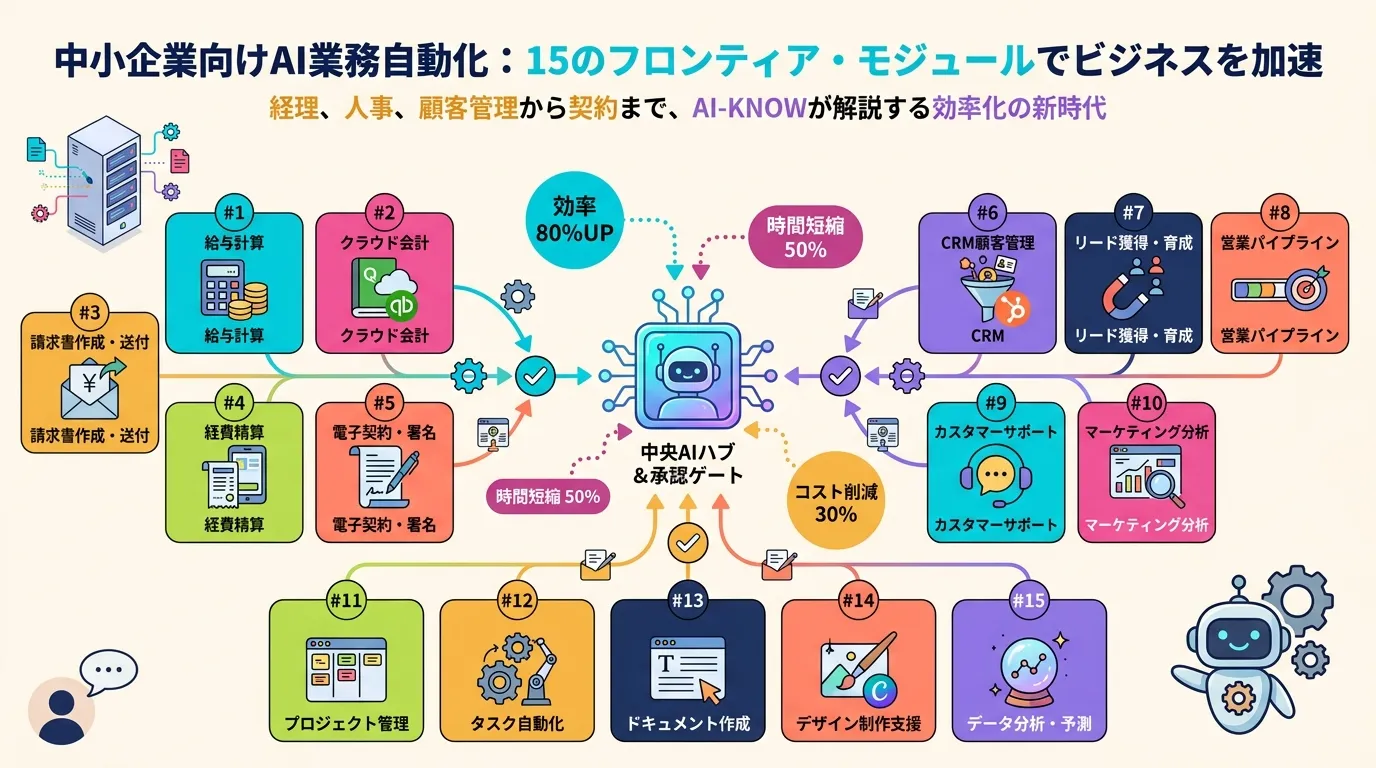
Anthropic Launches Claude for Small Business: 15 Agentic Workflows to Close the SMB AI Gap
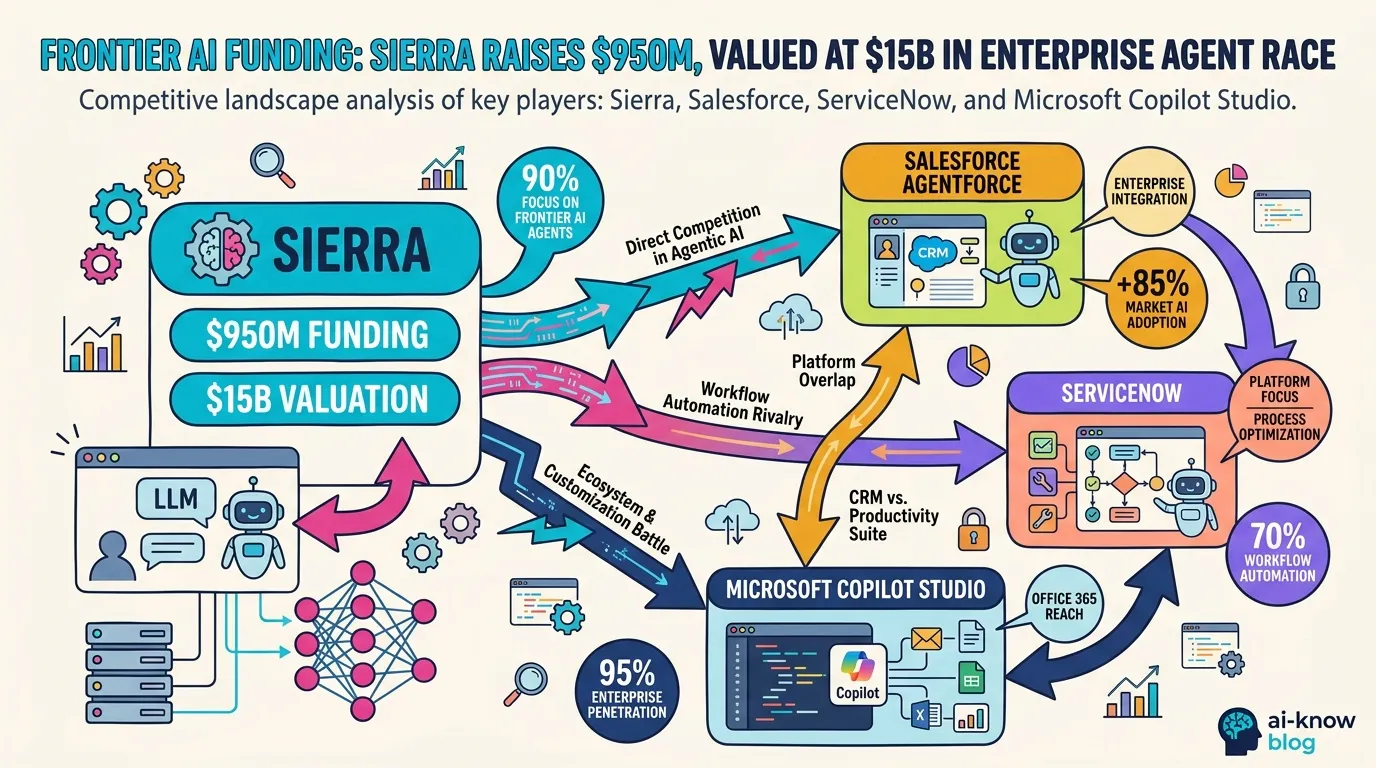
Sierra's $950M Raise Signals the Enterprise AI Consolidation War
Anthropic Launches "Code w/ Claude 2026" — The Next Chapter of Agentic Coding Begins in SF
ServiceNow's AI Control Tower: Agentic AI Governance from Desktops to Data Centers
Anthropic and OpenAI Race to Form Enterprise AI Joint Ventures