Space-Based AI Infrastructure 2026: Comparing Google, SpaceX, Cowboy Space, and Blue Origin in the Race to Orbit
Solar-powered TPUs, self-launching rockets, and million-satellite constellations — four players vying to move AI compute off Earth
Ground-based data centers face three compounding constraints in 2026: power procurement, cooling capacity, and permittable land. The result is a race not just for compute, but for where compute lives. Four players — Google DeepMind, SpaceX, Cowboy Space, and Blue Origin — are now seriously betting that the answer is orbit.
Why the Ground Constraint Is Real
The power math is sobering. Hyperscalers collectively committed over $600 billion in capex for 2025–2026, but grid interconnection queues in the US now stretch 5–7 years. Anthropic locked in a 5 GW compute contract with Amazon; OpenAI’s Stargate project is consuming entire power grids in Texas. Space offers a different physics: perpetual sunlight in dawn-dusk sun-synchronous orbit, vacuum cooling via thermal radiation, and no grid politics.
The economics don’t work today — a 1 GW orbital facility would cost roughly $42 billion versus ~$14 billion on the ground. But Starship’s projected $/kg trajectory and accelerating solar panel density curves point to a potential crossover around 2035.
The Four Players: A Comparison
Google — Project Suncatcher (Research Phase)
Google DeepMind‘s Project Suncatcher, announced November 2025 and detailed in an April 2026 research paper, envisions clusters of 81 satellites each carrying Trillium (TPU v6e) chips in dawn-dusk sun-synchronous LEO. Free-space optical inter-satellite links would provide ~10 Tbps bandwidth per cluster.
The radiation question was the critical gate: Google tested Trillium under a 67 MeV proton beam and found zero hard faults up to 15 krad(Si) — nearly 20× the expected 5-year mission dose. In partnership with [[planet-labs]], two prototype satellites are slated for early 2027 to validate orbital ML inference and optical links.
Approach: Research-to-product pipeline with own silicon (TPU). Leverages Google Cloud’s distribution for eventual productization. Long timeline (commercial viability ~2035).
SpaceX — 1 Million Satellite Mega-Constellation
In January 2026, SpaceX filed an FCC application for a constellation of up to one million orbital data center satellites at 500–2,000 km altitude. The claim: once Starship scales to 180 launches/year, the system could add 100 GW of AI compute annually at competitive cost. Each satellite would generate 100 kW of compute power per tonne of mass.
SpaceX’s IPO prospectus simultaneously listed orbital AI data centers as a key revenue thesis while flagging them as an unproven risk. As of May 2026, Google partnership talks are ongoing — SpaceX provides the launch and orbital infrastructure, Google provides the AI workloads and silicon.
The xAI angle adds complexity: SpaceX acquired xAI in February 2026, creating a vertically integrated Musk stack (compute infrastructure → AI models → orbital delivery) with Anthropic also contracted for the Colossus facility’s spare capacity.
Approach: Vertical integration play. Own launch capability is the moat. FCC path faces heavy opposition (astronomy community, NASA). Commercial viability tied directly to Starship reusability milestones.
Cowboy Space — The Startup Contender
Cowboy Space (formerly Aetherflux, founded by Robinhood co-founder Baiju Bhatt) raised a $275M Series B in May 2026 at a $2B valuation. The lead insight: there aren’t enough rockets to scale orbital data centers even if demand were clear, so they’re building their own.
The design is distinctive: the rocket’s second stage becomes the data center. Each unit carries 1 MW of power and ~800 GPUs, using NVIDIA’s Space-1 Vera Rubin Modules — chips specifically hardened for the space radiation environment. The planned Stampede constellation would aggregate these units for large-scale workloads. First launch targets late 2028.
Investors include Breakthrough Energy Ventures, Index Ventures, a16z, SAIC, and IVP — a mix that signals both deep tech conviction and defense/government market ambitions.
Approach: Vertically integrated newcomer. Builds rockets to control launch cadence and cost. Furthest from commercial operation but well-capitalized for the long build.
Blue Origin — Project Sunrise
Blue Origin filed for 51,600 satellites under Project Sunrise in March 2026, also targeting sun-synchronous orbits with solar-powered compute and laser inter-satellite links. As of May 5, 2026, NASA formally objected to the FCC application, citing orbital congestion risks.
Blue Origin’s approach mirrors Project Kuiper (Amazon’s broadband constellation) in structure but targets AI compute workloads. Bezos’s dual role at Blue Origin and Amazon gives an interesting incentive: if orbital compute becomes viable, Amazon Web Services would presumably be an anchor customer.
Approach: Leverage Blue Origin’s New Glenn rocket. Slower-moving than SpaceX but with Amazon ecosystem as potential anchor. Regulatory hurdle from NASA objection is significant.
Comparison Table
| Dimension | Google Suncatcher | SpaceX Mega-DC | Cowboy Space | Blue Origin Sunrise |
|---|---|---|---|---|
| Status | Research / 2027 prototype | FCC pending (1M sat) | Series B, 2028 launch | FCC pending (51,600 sat) |
| Hardware approach | Own TPU (Trillium) | TBD | NVIDIA Space-1 Vera Rubin | TBD |
| Launch vehicle | Partner (Planet Labs / SpaceX) | Starship | Own rocket (2028) | New Glenn |
| Scale target | 81-sat clusters | 1M satellites, 100 GW/yr | Stampede constellation | 51,600 satellites |
| Economics crossover | ~2035 | Starship-dependent | 2028+ | Bezos-timeline |
| Key risk | Long timeline, no own launch | FCC approval, astronomy pushback | Execution risk (new rocket + DC) | NASA objection, slower pace |
| Revenue model | Google Cloud AI services | AI compute as a service | Orbital DC as a service | AWS integration |
Which Workloads Fit Orbital Compute?
Better fit: Batch inference jobs tolerant of moderate latency (200–800 ms RTT to ground), scientific ML (climate modeling, protein folding), military ISR and edge processing in denied environments, and global data processing where data locality to the edge (sensors in orbit) matters.
Poor fit: Real-time inference APIs (user-facing), latency-sensitive training runs requiring tight synchronization, and workloads where regulatory data residency requirements prohibit offshore (or off-Earth) processing.
Pitfalls and Watch Points
Kessler syndrome risk: SpaceX’s 1M satellite plan drew 1,000+ FCC comment objections. The orbital shell at 500–2,000 km is already congested. A major collision creating debris could cascade and jeopardize the entire LEO commercial ecosystem.
Radiation economics: Even with hardened chips (NVIDIA Space-1, Google Trillium), mission lifetimes of 5–7 years limit ROI. Servicing missions remain unproven at scale.
Ground station bottleneck: Orbital compute still needs downlinks. Free-space optical ground terminals are scarce and weather-sensitive. This adds latency and geographic constraints that ground data centers don’t have.
Regulatory fragmentation: FCC, ITU, and individual country spectrum regulators all have jurisdiction. NASA’s Project Sunrise objection signals that US government agencies themselves aren’t aligned.
2026 Outlook
The next 12 months are likely to bring FCC decisions on SpaceX’s and Blue Origin’s applications, Google’s 2027 prototype announcement, and Cowboy Space’s first launch demonstration milestone or slip. Watch for:
- SpaceX-Google partnership terms (if announced): will define the first real commercial orbital AI compute offering
- Starcloud’s Blackwell launch (October 2026): next proof point for orbital GPU viability
- FCC mega-constellation rulings: will set the regulatory ceiling for how many satellites are permitted
The technology works — Starcloud proved it with NanoGPT in orbit in November 2025. The question is whether the business case closes before 2035, and which player controls the orbital real estate when it does.
Sources
- Google and SpaceX in Talks to Put Data Centers into Orbit — TechCrunch (2026-05-12)
- Cowboy Space Raises $275M to Build Orbital AI Data Centers — TechCrunch (2026-05-11)
- Exploring a Space-Based, Scalable AI Infrastructure System Design — Google Research (2026-04-30)
- Project Suncatcher: Google to Launch TPUs into Orbit with Planet Labs — Data Center Dynamics
- SpaceX Files for Million-Satellite Orbital AI Data Center Megaconstellation — DCD
- Blue Origin Joins the Orbital Data Center Race — SpaceNews
- Cowboy Space Raises $275M — SpaceNews
- Nvidia-backed Starcloud Trains First AI Model in Space — CNBC (2025-12)
- NASA Objects to Blue Origin’s Project Sunrise — SatNews (2026-05-05)
- SpaceX S-1 Warns Orbital Data Centres May Not Be Viable — The Next Web
Related Articles
AI Compute Infrastructure 2026: Anthropic's $50B Pledge, the xAI Colossus Deal, and Google-Broadcom's 8.5GW Bet
State of LLM Reasoning 2026: Comparing GPT-5.5, Gemini 3 Deep Think, and AlphaEvolve
Edge Omni Models in 2026: Gemma 3n, Nemotron Nano Omni, and Granite 4.1 Compared
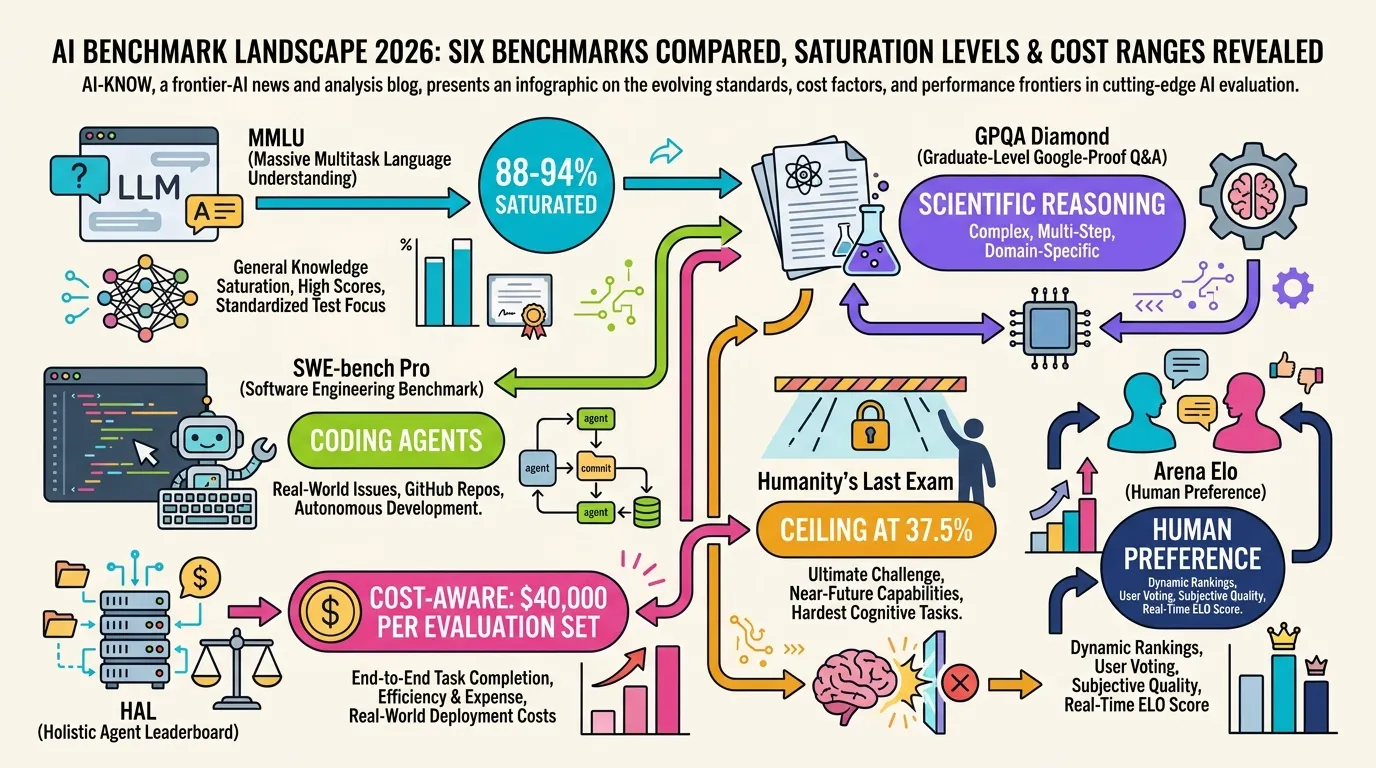
AI Evaluation in 2026: Beyond MMLU — A Practical Guide from SWE-bench Pro to HLE
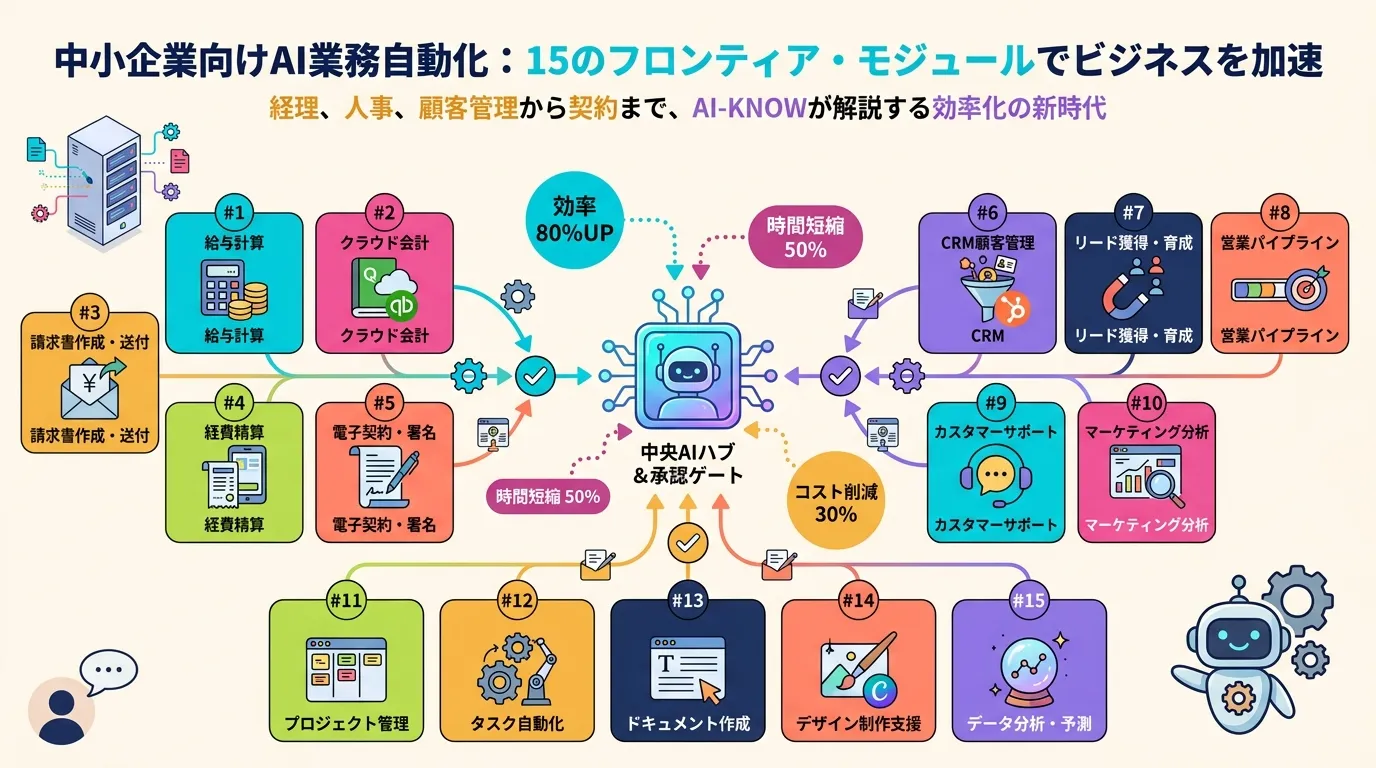
Anthropic Launches Claude for Small Business: 15 Agentic Workflows to Close the SMB AI Gap